BIOGRAPHY
Moritz
Winker.
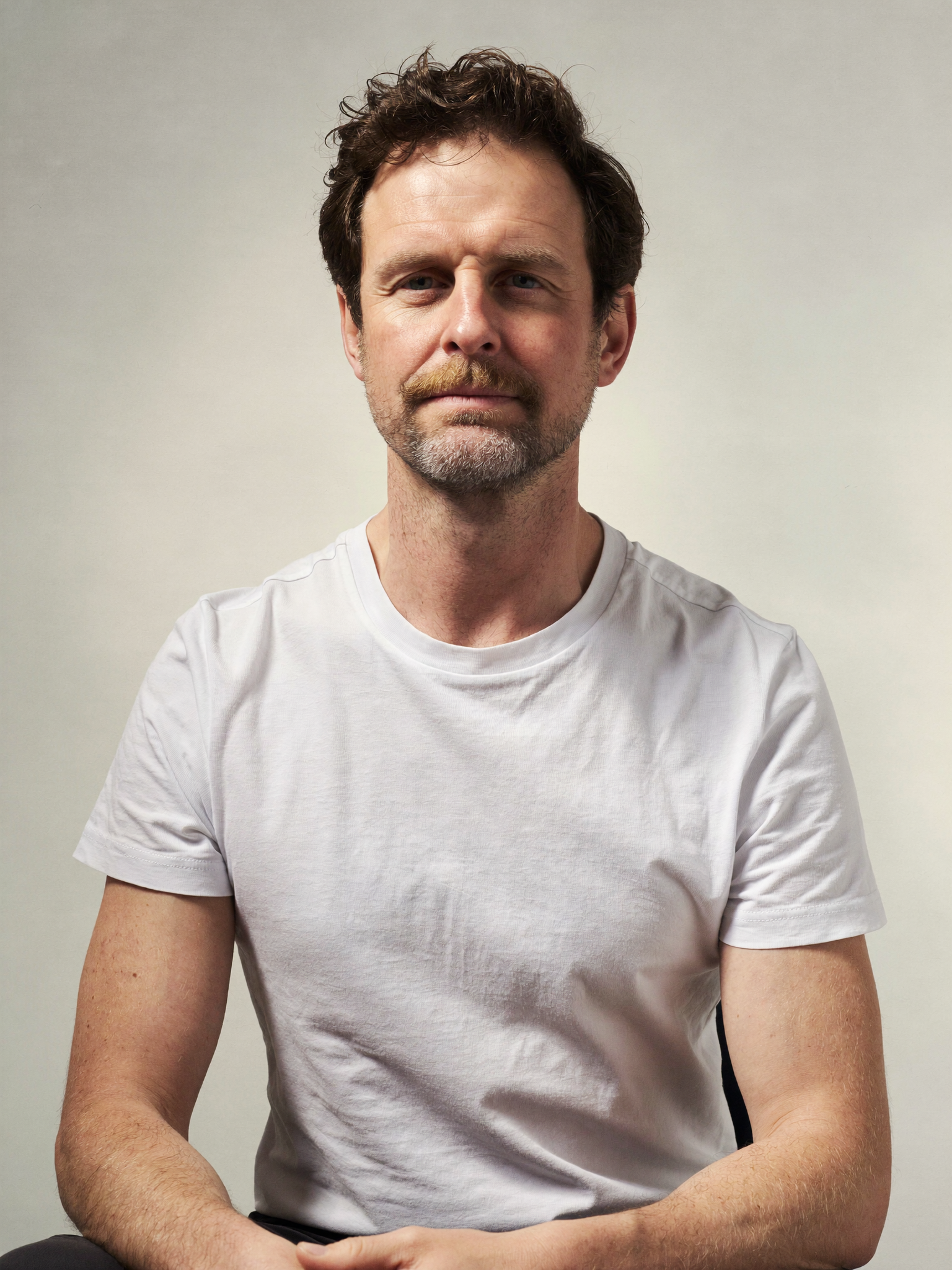
Music has always
been at the centre
of the work.
For Moritz Winker, orchestral playing, teaching and a continuing curiosity about the bassoon are closely connected. Since 2009, the Bavarian State Opera has been the centre of his professional life — a place shaped by opera, symphonic repertoire and the particular intensity of making music together night after night.
FULL BIOGRAPHY
Moritz Winker is Principal Bassoon of the Bavarian State Orchestra at the Bavarian State Opera in Munich, a position he has held since 2009. His musical work is centred on the opera house, where orchestral playing, chamber music and the stage come together on a daily basis. Over the years, this environment has shaped an approach to playing that combines precision and flexibility with a particular interest in sound, breathing and the physical ease of making music.
Born in Tübingen in 1984, Winker began playing the bassoon at the age of seven. After moving to Erfurt, he continued his musical education there and received several national prizes at Jugend musiziert. As a young musician he became a member of the German National Youth Orchestra and later principal bassoon of the Junge Deutsche Philharmonie. Further formative orchestral experience took him to the Pacific Music Festival in Sapporo, the Zermatt Festival and the Schleswig-Holstein Music Festival. He was also a scholarship holder of the German Academic Scholarship Foundation (Studienstiftung des deutschen Volkes).
Winker studied bassoon with Albrecht Holder at the University of Music Würzburg, initially as a pre-college student and later as a full-time student. From 2007 to 2009 he was a member of the Orchestra Academy of the Staatsoper Unter den Linden in Berlin. Guest engagements as principal bassoon with the Deutsche Radio Philharmonie and the Rundfunk-Sinfonieorchester Berlin followed before he joined the Bavarian State Opera as Principal Bassoon in 2009.
Alongside his work in the opera orchestra, Winker has appeared in a wide range of symphonic and solo projects. He performed as a soloist with the Bavarian State Orchestra under Kent Nagano and, in 2024, joined clarinettist Nicola Hattwig as soloist in Richard Strauss’s Concertino with the Munich Symphony Orchestra under Joseph Bastian. His orchestral work has also included regular guest appearances as principal bassoon with the Munich Philharmonic and performances with the Bavarian Radio Symphony Orchestra, including Tchaikovsky’s Fifth Symphony under Franz Welser-Möst in 2024.
Winker completed his diploma at the University of Music Würzburg with distinction. In recognition of this achievement, he received the 2013 Kulturpreis Bayern in the category for art academies. He subsequently completed the postgraduate Meisterklasse in bassoon with Albrecht Holder in 2015.
Since 2019, teaching has formed a second major part of his professional work. Winker teaches bassoon at the University of Music Würzburg, returning as a teacher to the institution where he himself studied. His teaching extends beyond Würzburg through masterclasses, including at the Manhattan School of Music in New York in 2020, the University of Music Dresden in 2026 and in São Paulo in 2026. The connection between performing and teaching is central to his work: experiences from the orchestra pit and concert stage feed directly into questions of sound, technique, breathing and preparation.
At the centre of both his playing and teaching is an interest in making complex processes feel natural. Rather than treating technique as an end in itself, Winker approaches it as a means of creating greater freedom in sound, phrasing and musical communication. His work with students therefore reaches from the fundamentals of breathing and sound production to orchestral repertoire, reed making and the particular physical and psychological demands of auditions and professional orchestral playing.
Performance and teaching remain closely connected in his work: the orchestra provides a daily laboratory for listening, reacting and adapting, while teaching creates the opportunity to examine those processes more closely. Both are driven by the same underlying curiosity — how an instrument works, how a musician works with it, and how greater understanding can ultimately lead to greater musical freedom.
SELECTED MILESTONES
A few points
along the way.
Technique is not an end in itself. It creates the freedom to listen, react and make musical decisions.
01
2001
Pre-college studies · Albrecht Holder · Würzburg
02
2007-09
Orchestra Academy · Staatsoper Unter den Linden · Berlin
03
2009-
Principal Bassoon · Bavarian State Orchestra
04
2012
Soloist · Bavarian State Orchestra · Kent Nagano
05
2013
Kulturpreis Bayern
06
2015
Meisterklasse · University of Music Würzburg
06
2019
Bassoon Faculty · University of Music Würzburg
06
2020
Masterclass · Manhattan School of Music · New York
06
2024
Strauss · Concertino · Munich Symphony Orchestra
06
2026
Masterclasses · Dresden · São Paulo
MUSIC & TEACHING
Two sides of
the same work.
Performing keeps ideas connected to musical reality. Teaching creates the space to examine them more closely. For Winker, the two have always belonged together.
Studying an instrument means developing much more than technique. Lessons connect sound, repertoire, orchestral playing, reed making and performance — with the aim of becoming an independent musician.
For official information about degree programmes, applications and auditions, please refer to the University of Music Würzburg.
PRESS & MEDIA
Biography for
programmes
and press.
Edited biographies and press material for concert programmes, media and professional use.
Natural playing · Breathing · Sound · Technique · Reeds
MUSIC