BASSOON
The instrument I keep coming back to.
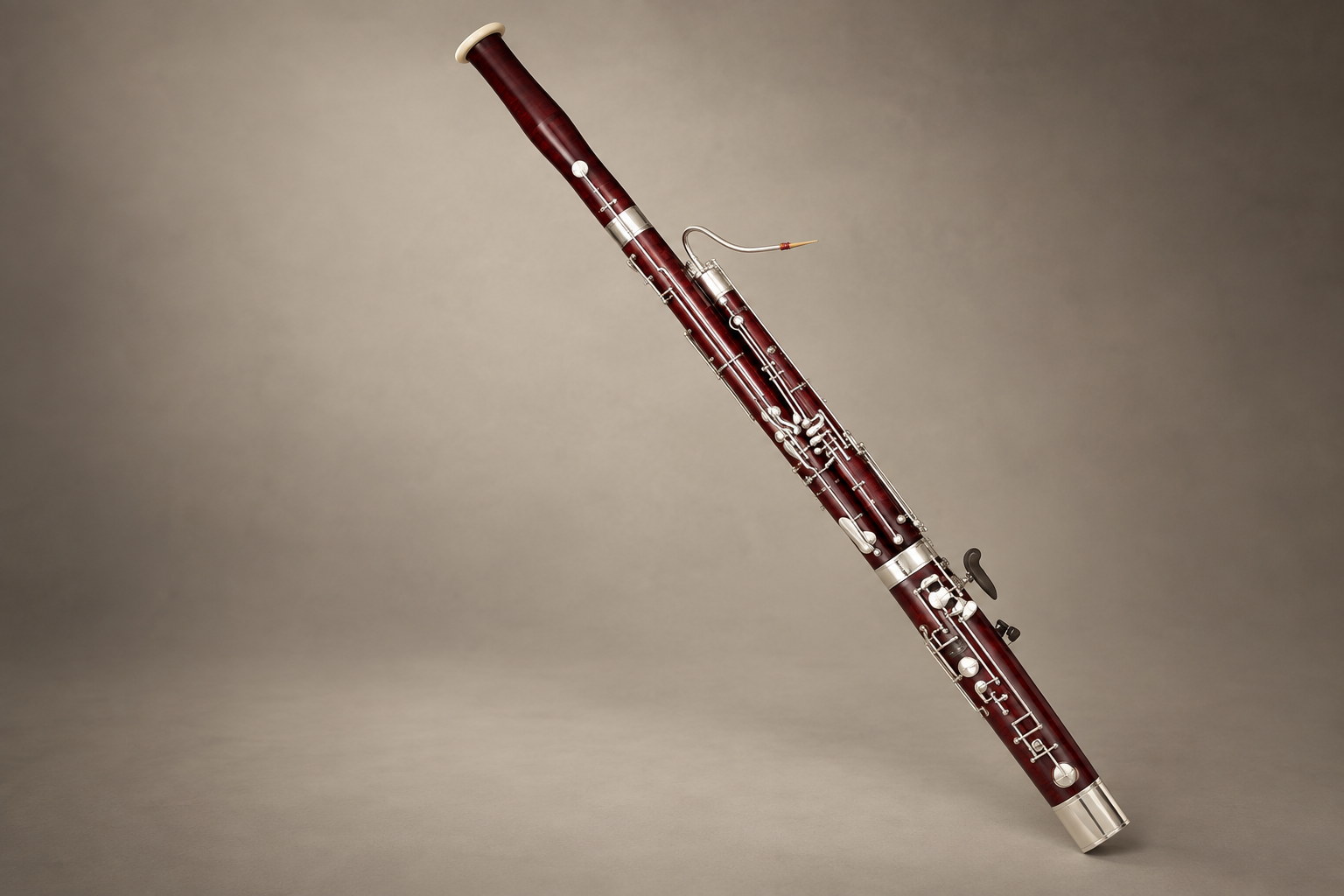
01 — THE INSTRUMENT
A strange instrument. A remarkably expressive one.
The bassoon is full of contradictions.
It can be rough, fragile, comic, dark, lyrical and unexpectedly powerful — sometimes within the same phrase.
What makes the instrument fascinating is the interaction between its construction, its acoustics and the player. Small changes can have surprisingly large consequences.
The details matter.
Much of playing the bassoon is about learning to notice them.
02 — SOUND
What makes a bassoon sound like itself?
01
Colour
The bassoon has an unusually wide palette of colours. Finding them is part of the instrument's fascination.
02
Projection
A sound has to work not only under the ear, but across a room and inside an orchestra.
03
Flexibility
Different musical situations require different kinds of sound — without losing the identity of the instrument.
04
Listening
The sound we imagine and the sound that actually reaches the listener are not always the same.
03 — REEDS
A small piece of cane. A surprisingly large influence.
The reed is where player and instrument meet most directly.
Its resistance, response, stability and colour influence almost everything that follows.
After years of making and playing reeds, I am still fascinated by how much information is hidden in such a small piece of material. A reed is never just a component — it is part of a constantly changing system.
Making, playing, observing.
The better we understand what a reed is doing, the more deliberately we can work with it.
04 — A PROJECT IN DEVELOPMET
ReedID
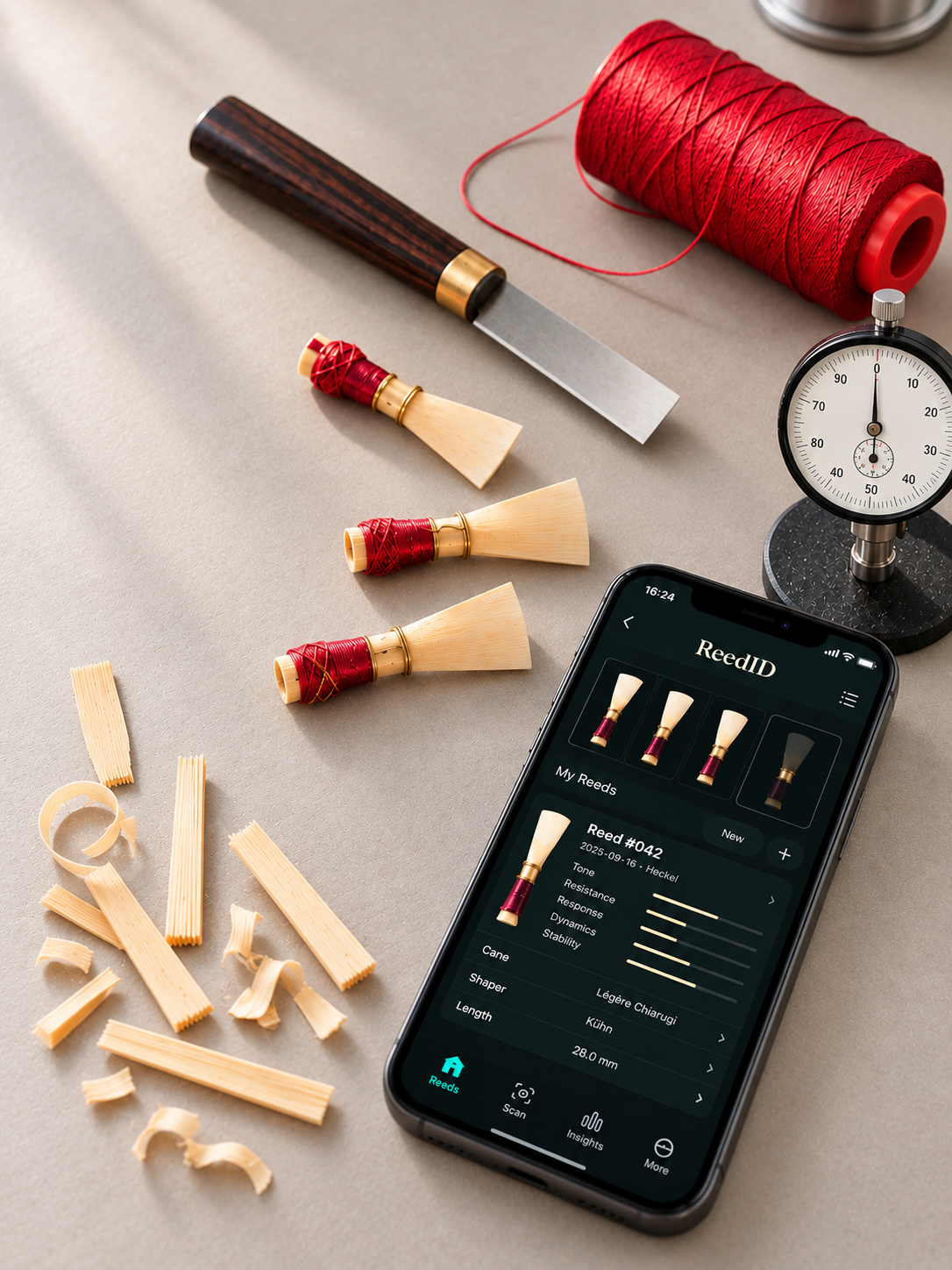
I am developing ReedID as a way of documenting, identifying and learning from reeds over time.
The idea is simple: make the individual reed traceable, connect observations to real playing experience, and build a better understanding of what makes a reed work.
05 — ORCHESTRAL PLAYING
The bassoon in the orchestra.
Playing an orchestral instrument means constantly changing perspective.
Sometimes the bassoon needs to disappear into the texture. Sometimes it carries the line. Sometimes a single note changes the character of an entire passage.
Orchestral playing is a continuous exercise in listening, timing, balance and colour. The instrument is never heard in isolation.
Context changes everything.
The same instrument can have completely different roles from one bar to the next.
06 — THE CRAFT
There is always something to figure out.
Professional playing is full of small questions.
01
INSTRUMENT
How does this particular bassoon respond today?
02
REED
What does the reed allow — and what does it resist?
03
ROOM
How does the sound behave in this acoustic?
04
MUSIC
What does this phrase actually need?
05
CONTEXT
What changes when the same passage is played with another conductor, another orchestra or another instrument?
07 — RESOURCES
Things worth keeping.
A growing collection of practical material, references and things I have found useful over the years.
01
FINGERINGS
Bassoon fingering resources and references.
02
REEDS
Reed making, adjustment and the ideas behind my own approach.
03
ORCHESTRAL EXCERPTS
Material for preparing and studying important orchestral passages.
04
LISTENING
Recordings and performances worth returning to.
05
TOOLS & REFERENCES
Tools, materials and editions that have become part of my own work.