BASSOON · REEDS
The reed is partof the instrument.
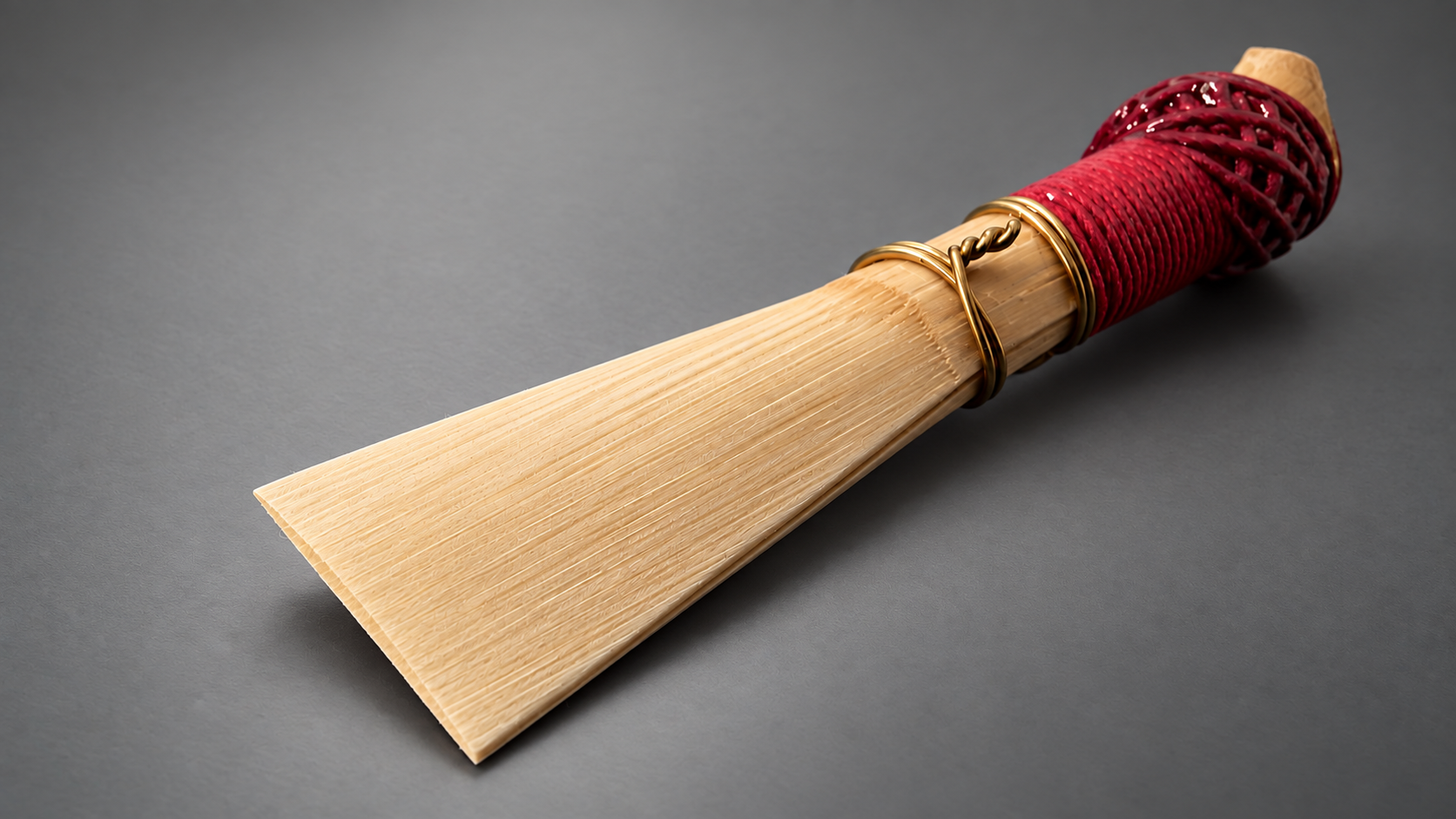
More than a consumable.
A bassoon reed is a small object with a disproportionately large influence on the way the instrument behaves.Acoustically, the reed does not act independently. It functions as a pressure-controlled valve coupled to the resonances of the instrument. At the same time, the player continuously influences this system through blowing pressure and embouchure. dael.euracoustics.orgFor the player, the consequences are immediate. Changes in a reed can affect response, resistance, intonation, dynamic flexibility and the way the instrument feels.This is why I do not regard the reed simply as an accessory to the bassoon. In practical terms, it becomes part of the instrument I am playing.
Instrument, reed and player form a system.
MY APPROACH
From soundto versatility.
I began making the reeds I used myself during my studies, around my fourth semester. Since then, the reeds I make have accompanied almost every part of my professional life: rehearsals, opera performances, symphonic concerts, chamber music and solo playing. My priorities have changed over the years. Earlier, I was particularly interested in creating a reed capable of producing a deeply engaging, resonant sound. With increasing orchestral experience, another quality became just as important to me: versatility. A professional reed has to do more than sound beautiful in one register, one dynamic or one room. I need it to allow me to change colour, articulate directly or softly, support a singer, blend into a woodwind chord, project through an orchestra and remain controllable during a long opera.I therefore no longer think of a good reed as one that maximises a single characteristic. For me, a good reed creates possibilities.
ANATOMY OF A PROCESS
What makesa reed work?
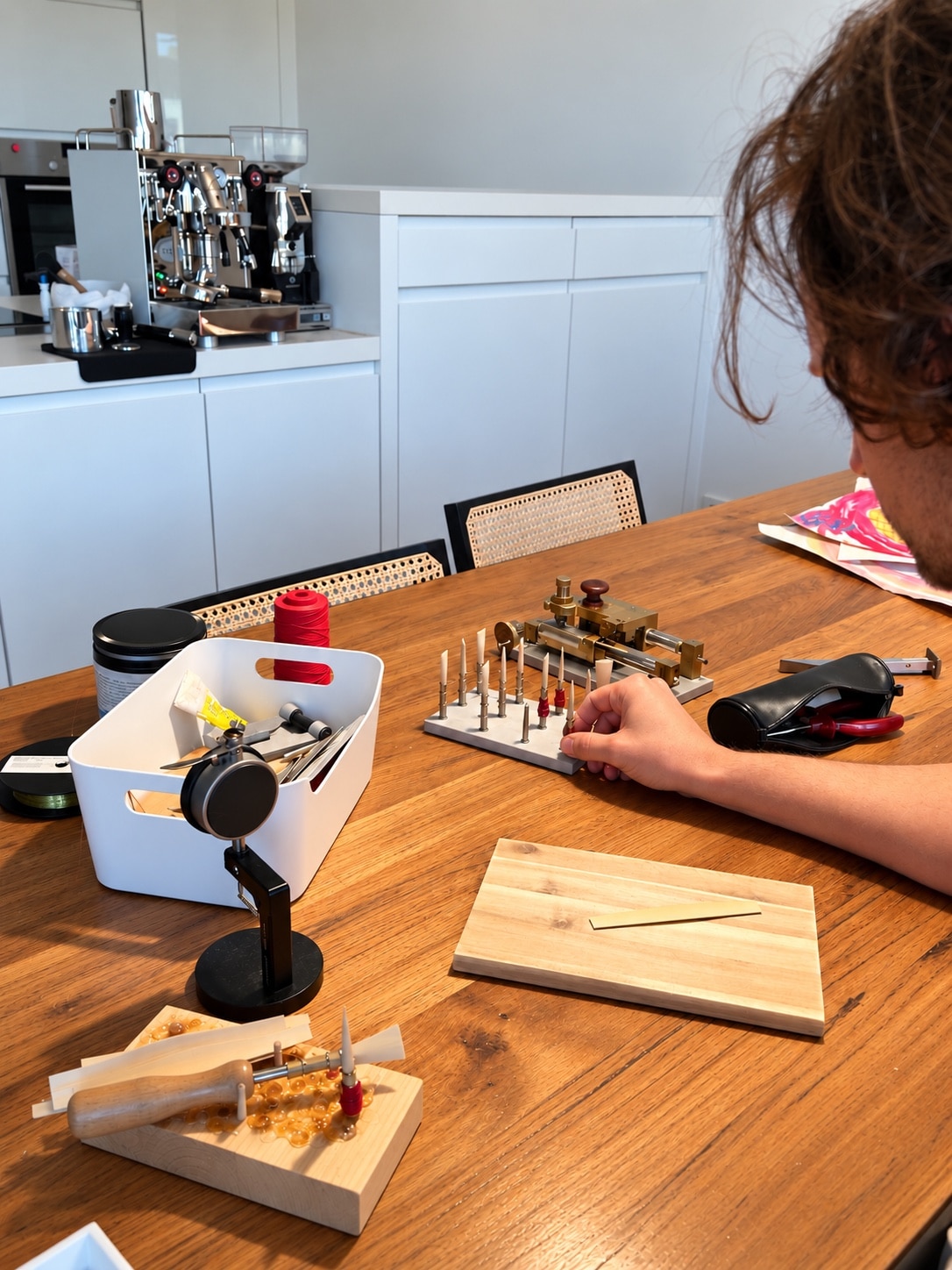
Reed making consists of a series of measurable and repeatable processes applied to a material that is inherently variable. Understanding both sides of that equation is essential.
01
Cane
Cane is the starting material, and it is never perfectly uniform. Its physical properties influence how the finished reed responds to everything that follows.
02
Gouge
Gouging establishes the internal curvature and thickness distribution of the cane before the reed is shaped and formed. It is one of the fundamental geometric parameters of the blank.
03
Shape
The shaper determines the outline of the cane. Width at different points influences the geometry of both blade and tube and is therefore far more than a cosmetic choice.
04
Profile
Profiling establishes much of the initial thickness distribution. It creates the starting point from which the finished scrape develops.
05
Forming
Forming transforms a flat piece of cane into a three-dimensional tube. Mandrel, wires and forming technique all contribute to the resulting geometry.
06
Scrape
Scraping is where very small changes become musically significant. Material is not simply made “thinner”; its distribution across the blade is changed.
07
Length & finishing
Blade length, overall length, tip opening and final adjustments become part of the geometry of the finished reed.
08
The player
The process does not end at the workbench. A reed only reveals its behaviour when it is played — on an instrument, by a particular player, in a musical context.

There is nosingle perfectreed.
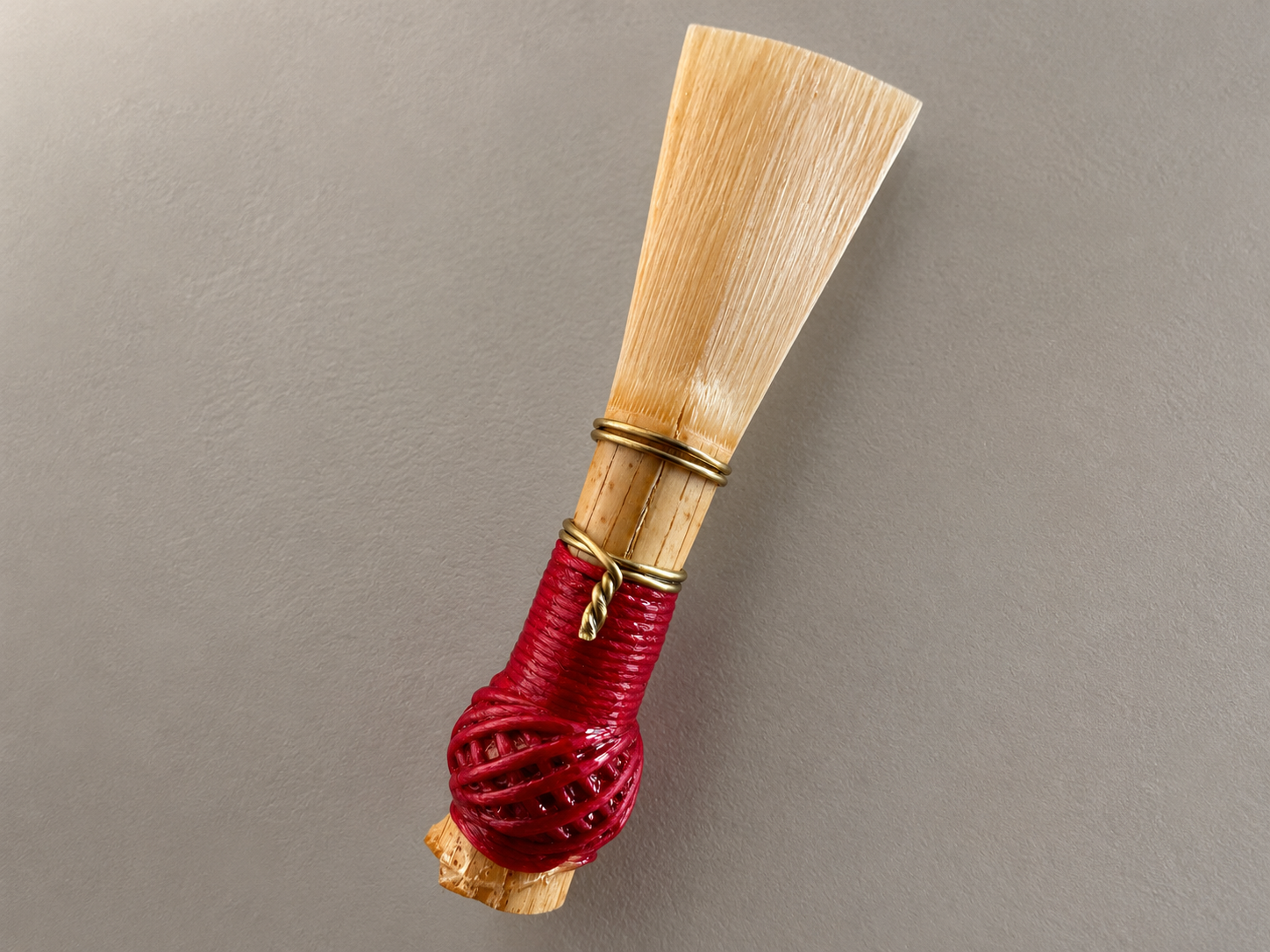
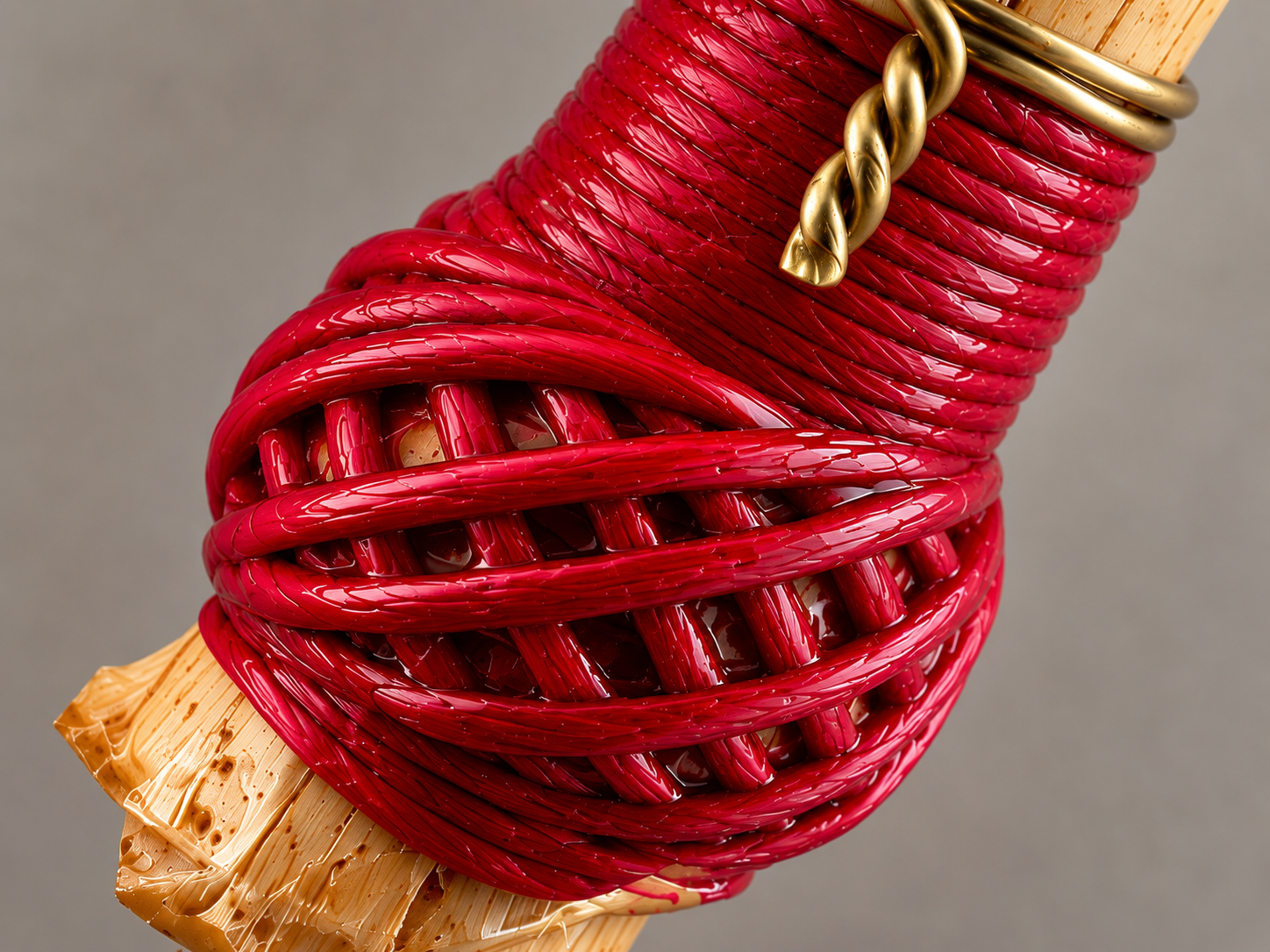
Bassoonists have developed many successful approaches to reed making.The surviving evidence is remarkably diverse. The International Double Reed Society's Bassoon Reed Project documents reeds by professional players with substantial differences in overall length, blade length, width, wire position and construction. IDRSThat diversity is important. It suggests that dimensions should not be mistaken for a universal recipe.Measurements are extremely useful. I use them to define a process, repeat decisions and compare results. But a number cannot tell me whether I want to play Rosenkavalier on a particular reed tomorrow evening.That decision remains musical.
A measurement is not a recipe.
It is a piece of information.
TEACHING
Learning to make decisions.
Reed making is part of my bassoon teaching because independence at the instrument also means understanding the interface between player and instrument.
01
PROCESS
First comes a reliable process: knowing the tools, working accurately and establishing repeatable dimensions.
02
OBSERVATION
Students learn to distinguish between what they measure, what they feel and what they hear.
03
DIAGNOSIS
When a reed does not behave as expected, the important question is not immediately where should I scrape? but what exactly is the problem?
04
DECISION
Only then does adjustment become meaningful: make a deliberate change, play again and evaluate what actually happened.
I do not want students simply to reproduce my reeds. I want them to understand their own.
OBSERVATION
We make hundreds of observations. Most of them disappear.
A reed changes. Our perception changes. The musical situation changes. Yet much of what we learn remains only in memory.
What made that reed good?
Imagine a reed that initially feels unremarkable. A week later it opens up. In the orchestra it blends exceptionally well. During a long opera it remains stable for hours. Another reed has a wonderful sound but becomes difficult to control late in the performance. These are valuable observations.We make them constantly. But several months later, what remains? Perhaps we remember that one reed was particularly good. We may even remember its shape or the cane it came from. But the connection between how it was made, how it changed and how it actually performed is easily lost.That gap between making and experience began to interest me.
A PROJECT IN DEVELOPMENT
ReedID
ReedID grew from a simple question: What if a reed could keep its history? I am developing ReedID as a way of giving an individual reed an identity and connecting information about its construction with observations from actual playing.The intention is not to tell a bassoonist how a reed should be made. And it is not to replace experience with data.It is to preserve experience. Over time, that could make it possible to ask better questions: Which characteristics recur in the reeds I keep? Which adjustments actually improved them? How do they change with use? Which reeds remain reliable in demanding playing situations? ReedID is therefore a continuation of the way I already think about reed making: make → observe → play → adjust → learn.
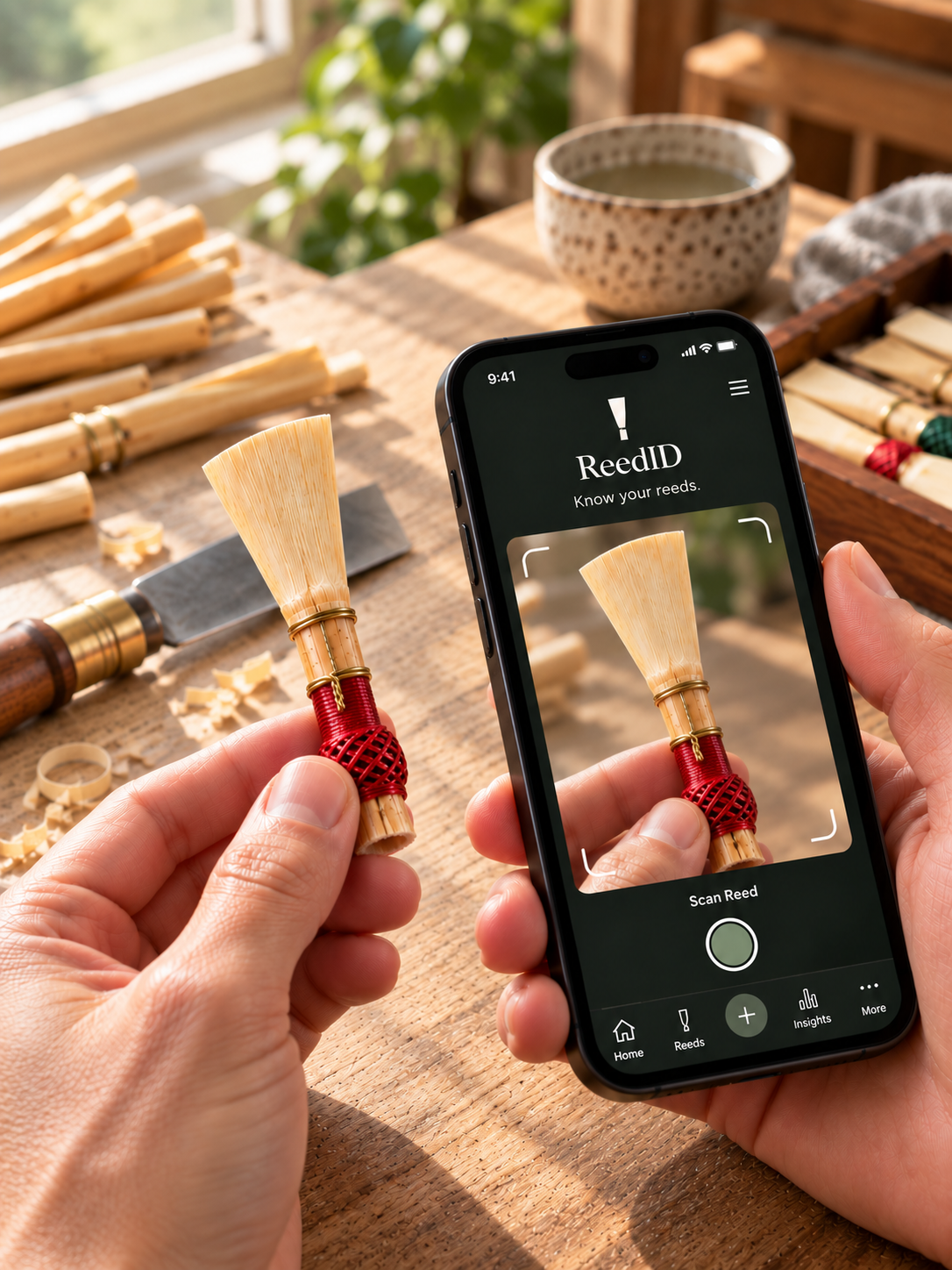
Craft and data.
Reed making will remain a craft.Cane will remain variable. Bassoons will differ. Players will have different embouchures, bocals, sound ideals and musical demands. Better documentation should not eliminate those differences.It can help us understand them. For me, this is where traditional reed making and new tools become interesting together. The hand provides experience. Measurement provides reference. Playing provides the test. Documentation allows us to remember. None of them is sufficient on its own.
Data should not replace the hand.
It should help us understand what the hand has learned.
REED MAKING · PLAYING · TEACHING · REEDID